


Helicobacter Pylori Breath Tests: Unlocking the Secrets to Digestive Health
Understanding Helicobacter Pylori and Its Impact on Digestive Health
Helicobacter pylori (H. pylori) is a type of bacteria found in the stomach lining, known for its significant role in various gastrointestinal disorders. This spiral-shaped bacterium is a common inhabitant of the human stomach, with an estimated 50% of the global population harboring it. While many infected individuals remain as
Understanding Helicobacter Pylori and Its Impact on Digestive Health
Helicobacter pylori (H. pylori) is a type of bacteria found in the stomach lining, known for its significant role in various gastrointestinal disorders. This spiral-shaped bacterium is a common inhabitant of the human stomach, with an estimated 50% of the global population harboring it. While many infected individuals remain asymptomatic, H. pylori can lead to serious health issues such as gastritis, peptic ulcers, and even gastric cancer.
What Are Breath Tests for Helicobacter Pylori?
Breath tests for H. pylori are non-invasive diagnostic procedures that help identify the presence of this bacterium in the stomach. They are primarily used to confirm an infection in patients exhibiting symptoms of gastrointestinal distress. The tests typically involve the ingestion of a urea solution, which H. pylori metabolizes, producing carbon dioxide that can be detected in the breath.
Types of H. pylori Breath Tests
There are two main types of breath tests used to diagnose H. pylori infection: the urea breath test (UBT) and the carbon-13 breath test.
The Urea Breath Test (UBT)
The UBT is the most common method for detecting H. pylori. During this test, patients consume a urea solution labeled with a non-radioactive isotope. If H. pylori is present, it breaks down the urea, releasing carbon dioxide that is absorbed into the bloodstream and exhaled into the breath. A breath sample is collected and analyzed for specific carbon isotopes.
The Carbon-13 Breath Test
Similar to the UBT, the carbon-13 breath test utilizes a carbon isotope to identify H. pylori. This method is particularly useful for patients who may have sensitivities to certain substances in the urea solution.
Why Choose Breath Tests Over Other Diagnostic Methods?
Breath tests offer several advantages compared to invasive procedures such as endoscopy or biopsy.
Non-Invasive and Painless
Breath tests are non-invasive, requiring no needles or surgical procedures. Patients can undergo the test in a comfortable setting without the need for sedation.
Rapid Results
The results from breath tests can often be obtained within a few hours, allowing for quick diagnosis and treatment initiation.
High Accuracy
Breath tests have demonstrated high sensitivity and specificity in detecting H. pylori, making them a reliable option for diagnosing infections.
Preparing for the Breath Test
Proper preparation is crucial for obtaining accurate test results.
Dietary Restrictions
Patients are typically advised to avoid certain foods and beverages 24 hours prior to the test. This includes avoiding antibiotics, proton pump inhibitors, and bismuth-containing medications, as they can interfere with the results.
Fasting
Patients are usually required to fast for at least six hours before the test. This ensures that the stomach is empty and that results are not affected by recent food intake.
What to Expect During the Breath Test
Understanding the process can alleviate anxiety and make the experience smoother.
The Testing Procedure
Upon arrival at the diagnostic center, a baseline breath sample is collected to assess the patient's initial carbon dioxide levels. Following this, the patient ingests the urea solution. After a waiting period, additional breath samples are taken for analysis.
Duration of the Test
The entire procedure usually lasts about 30 to 60 minutes, including the waiting period.
Understanding the Results
After the test, results will be reviewed, and a healthcare provider will discuss them with the patient.
Positive Results
A positive test indicates the presence of H. pylori, prompting further evaluation and treatment options, typically involving a course of antibiotics and acid-reducing medications.
Negative Results
A negative result suggests the absence of H. pylori; however, if symptoms persist, further investigation may be required.
Treatment Options for H. pylori Infection
If diagnosed with H. pylori infection, treatment typically involves a combination of antibiotics and proton pump inhibitors.
Antibiotic Therapy
A regimen of two or more antibiotics is standard to eradicate the bacteria effectively and prevent resistance.
Proton Pump Inhibitors (PPIs)
PPIs help reduce stomach acid production, aiding in healing and alleviating symptoms associated with H. pylori infection.
Preventing H. pylori Infection
While complete prevention may not be possible, certain measures can reduce the risk of infection.
Practicing Good Hygiene
Regular handwashing, particularly before meals, can help minimize the risk of H. pylori transmission.
Avoiding Contaminated Food and Water
Ensuring food is properly cooked and water is clean, especially when traveling, can help prevent infection.
Frequently Asked Questions (FAQs)
1. How accurate are H. pylori breath tests?
Breath tests are highly accurate, with sensitivity and specificity rates often exceeding 90%, making them a reliable method for diagnosing H. pylori infection.
2. Are there any side effects associated with the breath test?
The breath test is non-invasive and generally has no side effects, though some patients may experience mild nausea after consuming the urea solution.
3. How long does it take to get results from an H. pylori breath test?
Results can typically be obtained within a few hours to a day, depending on the testing facility.
4. Can I eat or drink before the breath test?
Patients are usually required to fast for six hours before the test to ensure accurate results.
5. What should I do if I test positive for H. pylori?
If diagnosed with H. pylori, your healthcare provider will recommend a treatment plan, typically involving antibiotics and medications to reduce stomach acid.
Conclusion
Helicobacter pylori breath tests play a crucial role in diagnosing and managing digestive health. Their non-invasive nature, rapid results, and high accuracy make them an invaluable tool in the detection of H. pylori infections. By understanding the importance of these tests, their preparation, and potential treatment options, patients can take proactive steps towards maintaining their digestive health. Regular check-ups and awareness of symptoms can further enhance your journey towards better gastrointestinal well-being.
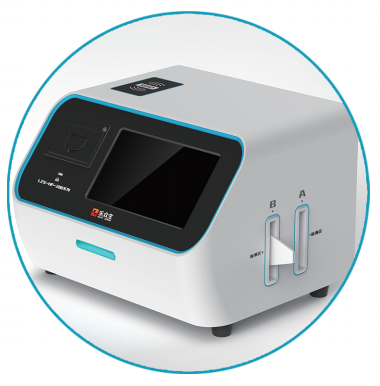
Helicobacter Pylori Breath Test Kit
Contact
Contacts: Jenny Pan
Address: Liandong U-Valley Medical and Health Industry Park, Hefei City, Anhui Province


