


Revolutionizing Helicobacter Pylori Detection: The Latest Healthcare Innovations
Revolutionizing Helicobacter Pylori Detection: The Latest Healthcare Innovations
Table of Contents
1. Introduction to Helicobacter Pylori and Its Impact on Health
2. Traditional Diagnostic Methods for H. Pylori
3. Innovative Healthcare Techniques Transforming Detection
3.1 Non-Invasive Testing Approaches
3.2 Molecular Diagnostics: PCR and Beyond
Revolutionizing Helicobacter Pylori Detection: The Latest Healthcare Innovations
Table of Contents
- 1. Introduction to Helicobacter Pylori and Its Impact on Health
- 2. Traditional Diagnostic Methods for H. Pylori
- 3. Innovative Healthcare Techniques Transforming Detection
- 3.1 Non-Invasive Testing Approaches
- 3.2 Molecular Diagnostics: PCR and Beyond
- 3.3 Endoscopy Advancements for H. Pylori Detection
- 3.4 Breath Test Technology: Fast and Efficient
- 4. Integrating Artificial Intelligence in H. Pylori Detection
- 5. Challenges in Helicobacter Pylori Detection
- 6. Future Potential and Trends in H. Pylori Diagnostics
- 7. Conclusion
- 8. Frequently Asked Questions (FAQs)
1. Introduction to Helicobacter Pylori and Its Impact on Health
Helicobacter Pylori (H. Pylori) is a gram-negative bacterium that resides in the gastric mucosa of humans. This microorganism is responsible for a significant proportion of gastric diseases, including chronic gastritis, peptic ulcers, and even gastric cancer. The World Health Organization has classified H. Pylori as a definite carcinogen, highlighting the necessity for effective detection and treatment options. Understanding the latest healthcare innovations that facilitate the detection of this pathogen is crucial for improving patient outcomes and tailoring appropriate therapeutic strategies.
2. Traditional Diagnostic Methods for H. Pylori
Historically, various diagnostic methods have been employed to detect H. Pylori, including:
- **Serological tests**: These tests detect antibodies against H. Pylori in the bloodstream. While they offer a quick and non-invasive option, they may not distinguish between active and past infections.
- **Urea breath tests**: Patients ingest a urea solution labeled with a carbon isotope. If H. Pylori is present, it metabolizes the urea, producing carbon dioxide that can be detected in the breath.
- **Endoscopy with biopsy**: This invasive method involves direct visualization of the stomach lining and obtaining tissue samples for histological examination. It is considered the gold standard but is often reserved for patients with significant symptoms or complications.
Despite their utility, traditional methods exhibit limitations in sensitivity, specificity, and patient comfort. This has led the medical community to explore more innovative diagnostic approaches.
3. Innovative Healthcare Techniques Transforming Detection
Recent healthcare innovations are vastly improving the detection of H. Pylori. Below, we delve into the most promising techniques.
3.1 Non-Invasive Testing Approaches
Emerging non-invasive methods focus on enhancing patient comfort while ensuring accurate detection. These include:
- **Salivary tests**: Researchers are investigating the use of saliva samples to test for H. Pylori. These tests are straightforward and can provide rapid results without the discomfort associated with endoscopy or blood draws.
- **Stool antigen tests**: Stool tests detect H. Pylori antigens and are increasingly utilized due to their non-invasive nature and ability to confirm active infections. They are particularly valuable for validating eradication after treatment.
3.2 Molecular Diagnostics: PCR and Beyond
Polymerase chain reaction (PCR) technology has revolutionized the diagnostic landscape for H. Pylori. PCR amplifies specific DNA sequences, enabling:
- **High sensitivity and specificity**: Molecular diagnostics can detect H. Pylori even in low bacterial loads, making it an invaluable tool for accurate diagnosis.
- **Rapid results**: The turnaround time for PCR tests can be significantly shorter than traditional culture methods, allowing for timely patient management.
- **Resistance testing**: PCR can also be adapted to detect antibiotic resistance genes, guiding more effective treatment plans.
3.3 Endoscopy Advancements for H. Pylori Detection
While endoscopy remains invasive, advancements are making it a more effective diagnostic tool. Techniques such as:
- **Narrow-band imaging (NBI)**: This technology enhances visualization of the gastric mucosa by using specific light wavelengths, improving the detection of H. Pylori-related lesions.
- **Confocal laser endomicroscopy (CLE)**: CLE allows for real-time imaging of tissue microstructures at a cellular level during endoscopy, providing immediate insights into the presence of H. Pylori.
These innovations aim to reduce the number of biopsies needed and enhance diagnostic accuracy.
3.4 Breath Test Technology: Fast and Efficient
The urea breath test has evolved with advancements in technology. Newer breath tests utilize:
- **Real-time analysis**: This method allows healthcare providers to obtain immediate results, facilitating prompt clinical decision-making.
- **Portable devices**: Innovative breath-testing devices are compact and can be used in outpatient settings, enhancing accessibility for patients.
- **Enhanced markers**: Researchers are exploring additional isotopes that may improve the sensitivity and specificity of breath tests even further.
These advancements not only increase the efficiency of H. Pylori detection but also improve patient experiences by minimizing discomfort.
4. Integrating Artificial Intelligence in H. Pylori Detection
Artificial Intelligence (AI) is making significant inroads into healthcare, including the detection of H. Pylori. AI-powered algorithms can analyze vast datasets from various diagnostic tests to:
- **Improve diagnostic accuracy**: Machine learning models can learn from patterns in data, identifying H. Pylori infections more reliably than traditional methods.
- **Streamline workflows**: AI can automate the processing of test results, reducing the burden on healthcare professionals and speeding up patient care.
- **Predict patient outcomes**: AI algorithms can be trained to predict the likelihood of complications from H. Pylori infections, aiding in proactive patient management.
The integration of AI promises to enhance the efficiency and effectiveness of H. Pylori diagnostics, paving the way for more personalized healthcare.
5. Challenges in Helicobacter Pylori Detection
Despite remarkable advancements, challenges remain in H. Pylori detection:
- **Variability in test accuracy**: Different diagnostic methods yield varying accuracy rates depending on the patient population and clinical setting.
- **Antibiotic resistance**: As resistance to commonly used antibiotics increases, it complicates treatment strategies and necessitates continuous monitoring of resistance patterns.
- **Public awareness and access**: Limited knowledge about H. Pylori and available diagnostic options can hinder timely detection and treatment, particularly in underserved populations.
Addressing these challenges is essential to improve the overall management of H. Pylori infections.
6. Future Potential and Trends in H. Pylori Diagnostics
Looking ahead, several trends are likely to shape the future of H. Pylori diagnostics:
- **Point-of-care testing**: The development of rapid, on-site testing methods will enhance accessibility and facilitate immediate treatment decisions for patients.
- **Integration of biomarkers**: Combining traditional tests with novel biomarkers could significantly improve diagnostic accuracy and allow for personalized treatment approaches.
- **Telemedicine and remote monitoring**: With the rise of telehealth, patients may receive remote consultations and follow-up care, making it easier to manage H. Pylori infections.
These advancements signify a shift towards more efficient, patient-centered care in H. Pylori detection and management.
7. Conclusion
The detection of Helicobacter Pylori is undergoing significant transformation due to innovative healthcare technologies and methodologies. From non-invasive testing approaches to the integration of artificial intelligence, the healthcare landscape is evolving to enhance diagnostic accuracy, speed, and patient comfort. As challenges persist, ongoing research and development will be vital to further improve detection strategies and treatment outcomes. The future of H. Pylori detection looks promising, with an emphasis on personalized care and cutting-edge technology.
8. Frequently Asked Questions (FAQs)
1. What is Helicobacter Pylori?
H. Pylori is a type of bacteria that infects the stomach lining and is associated with various gastric diseases, including ulcers and cancer.
2. How is H. Pylori detected?
Detection can be performed using various methods, including blood tests, breath tests, stool tests, and endoscopic biopsies.
3. What are the symptoms of H. Pylori infection?
Common symptoms include abdominal pain, bloating, nausea, and, in some cases, unexplained weight loss or symptoms of anemia.
4. Can H. Pylori be treated?
Yes, H. Pylori infections can typically be treated with a combination of antibiotics and proton pump inhibitors to eliminate the bacteria and promote healing.
5. Are there any new technologies for H. Pylori detection?
Yes, recent innovations include non-invasive tests like saliva and stool antigen tests, as well as advancements in breath test technology and molecular diagnostics like PCR.
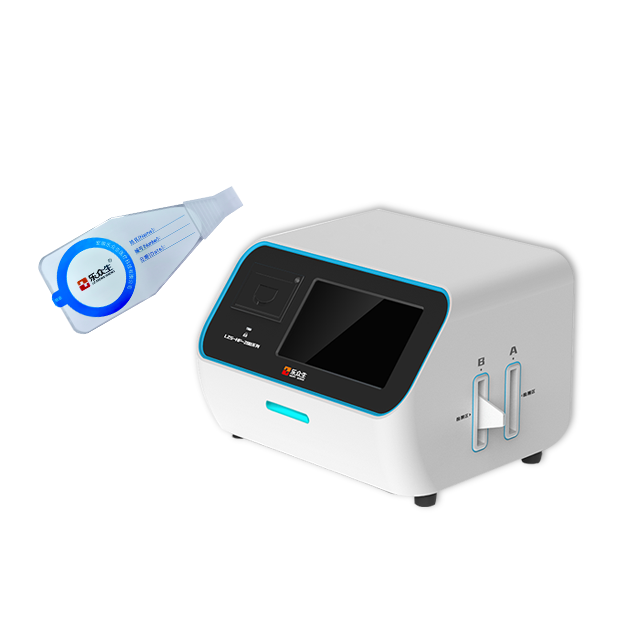
Helicobacter Pylori Detector
Contact
Contacts: Jenny Pan
Address: Liandong U-Valley Medical and Health Industry Park, Hefei City, Anhui Province


